
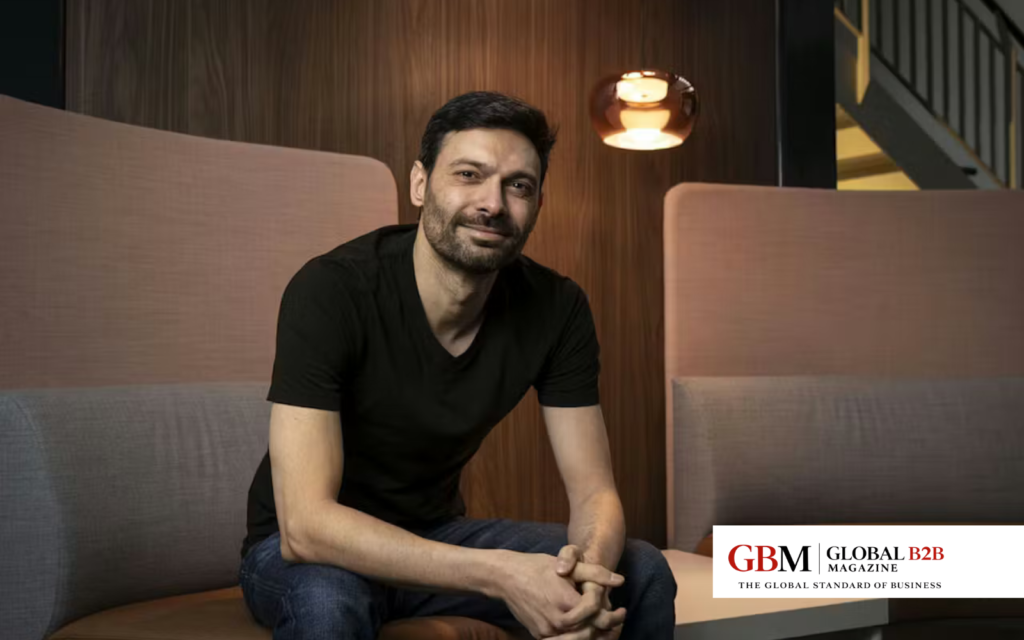
In a world where traditional banking has long been synonymous with bureaucracy and slow innovation, one entrepreneur dared to rewrite the rules. Ali Niknam, the founder and CEO of bunq, is not just another fintech success story—he represents a rare breed of self-funded disruptors who challenge entire industries with conviction, capital, and code.
Early Life: A Builder from the Start
Born in Canada and raised in the Netherlands, Ali Niknam displayed an entrepreneurial spark at an unusually young age. By just 16, he had already launched his first business—an early sign of the independence and drive that would define his career.
Unlike many founders who follow conventional academic or corporate paths, Niknam pursued technical studies at Delft University of Technology but quickly gravitated toward building real-world solutions. His mindset was clear: create, iterate, and own the outcome.
The First Success: Building a Tech Foundation
Before banking, Niknam made his mark in the tech world. In 2003, he founded TransIP, a web hosting company that grew into one of the largest digital infrastructure providers in Europe.
This venture was more than just financially successful—it gave him:
- Deep technical expertise
- Operational independence
- The financial resources to pursue bigger ambitions
While many entrepreneurs rely on venture capital, Niknam quietly built wealth and experience, setting the stage for his most ambitious move yet.
Reinventing Banking: The Birth of bunq
In 2012, Niknam turned his attention to an industry ripe for disruption: banking.
Frustrated by outdated systems and poor user experiences, he founded bunq with a bold vision—to create a bank built entirely around the user, powered by modern technology.
What Made bunq Different?
Unlike traditional banks, bunq was:
- Fully digital from day one
- Designed by engineers, not legacy institutions
- Focused on transparency, speed, and flexibility
But what truly set it apart was Niknam’s approach to funding.
The Self-Funded Gamble
Niknam invested over €100 million of his own money into bunq—an almost unheard-of move in fintech. This gave him:
- Complete control over the company’s direction
- Freedom from investor pressure
- The ability to prioritize long-term innovation over short-term profit
It was a high-risk, high-conviction bet—and it paid off.
Growth and Recognition: From Startup to Unicorn
After securing a European banking license—one of the first issued in decades—bunq rapidly expanded across Europe.
Key milestones include:
- Operating in 30+ countries
- Achieving unicorn status (valuation over $1 billion)
- Becoming one of Europe’s leading neobanks
Niknam’s strategy wasn’t about competing with traditional banks—it was about making them irrelevant.
Pushing Boundaries: Innovation Meets Regulation
Niknam didn’t just innovate in product design—he challenged the regulatory framework itself.
In a landmark legal battle with the Dutch Central Bank, bunq secured the right to use artificial intelligence for anti-money laundering processes. This case marked a turning point, signaling that technology could redefine compliance, not just customer experience.
Leadership Style: Visionary, Demanding, Uncompromising
Ali Niknam is known for his intense and highly focused leadership style.
He is often described as:
- Deeply detail-oriented
- Relentlessly product-focused
- Unwilling to compromise on quality
His philosophy centers on a simple idea:
Build something truly valuable, and users will come.
This approach has shaped bunq into a product-driven company where engineering and user experience take center stage.
Beyond Business: A Sense of Responsibility
Despite his low public profile, Niknam has also engaged in philanthropic efforts. In 2022, he co-founded the People for People Foundation, supporting those affected by the Russia–Ukraine war.
His actions suggest a broader worldview—one where success is not just measured in financial terms, but also in impact.
The Enigma: A Private Billionaire
In contrast to many modern tech CEOs, Niknam maintains a remarkably private personal life. He avoids the spotlight, rarely shares personal details, and stays largely absent from social media.
This deliberate distance reinforces his image as a builder first, public figure second.
Why Ali Niknam Matters
Ali Niknam’s story stands out in today’s startup ecosystem for one key reason: he did it his way.
At a time when most startups chase funding rounds and rapid exits, he chose:
- Ownership over dilution
- Long-term vision over hype
- Product excellence over marketing noise
His journey proves that disruption doesn’t always require external capital—sometimes, it just requires clarity, courage, and control.
Final Thoughts
Ali Niknam is not just building a bank—he’s redefining what a bank can be.
Through bunq, he has shown that financial institutions can be fast, user-friendly, and transparent. More importantly, he has demonstrated that true innovation often comes from those willing to challenge not just products—but entire systems.
In an industry slow to change, Niknam remains a rare force: a founder who doesn’t just adapt to the future—he builds it.