
Asia’s $91 Billion Skin Care Revolution
The Asia top 9 skin care brand brands in 2026 represent a formidable force in a market projected to reach USD 91.0 billion in 2026, growing at a 3.91% CAGR to hit USD 114.57 billion by 2032 . China dominates with a commanding 39% market share, while facial care products account for 43% of all sales . As consumer awareness of skin health surges driven by WHO-backed UV protection initiatives and AI-powered personalization these nine companies are setting the standard for innovation, efficacy, and market leadership across the continent .
The Ranking Methodology
Our selection of the Asia top 9 skin care brand brands in 2026 draws from MarkNtel Advisors market data, the *2026 Global Anti-Aging Skincare Industry White Paper*, Euromonitor International reports, and third-party efficacy evaluations . Each brand is assessed across four critical dimensions: Experience (real-world results), Expertise (R&D and patents), Authoritativeness (industry recognition), and Trust (consumer satisfaction) .
1. Shiseido Company Limited (Japan)
| Metric | Detail |
|---|---|
| Estimated Valuation | ¥1.2 trillion (approx. USD 8.5 billion market cap) |
| Core Expertise | Anti-aging, UV protection, fermentation technology |
| Hero Product | Vital-Perfection Uplifting and Firming Cream |
| Primary Issue Solved | Age-related loss of firmness, hyperpigmentation, and UV damage |
Why They Lead: Shiseido remains Japan’s undisputed skin care powerhouse, combining over 150 years of heritage with cutting-edge dermatological research. The company has pioneered AI-powered multi-spectral facial imaging that evaluates up to 16 skin conditions simultaneously, enabling hyper-personalized treatment recommendations . Their expertise in fermentation-derived ingredients and UV protection technologies positions them as a trusted authority across Asia, particularly in China and South Korea, where demand for science-backed anti-aging solutions continues to surge.
Market Position: With the Asian skin care market expanding at 20.1% CAGR in the anti-aging segment alone, Shiseido’s commitment to cell-level repair technologies and preventive skincare education aligns perfectly with consumer trends .
2. Amorepacific Corporation (South Korea)
| Metric | Detail |
|---|---|
| Estimated Valuation | KRW 12 trillion (approx. USD 9.0 billion) |
| Core Expertise | Fermented green tea, probiotics, AI skin diagnostics |
| Hero Product | Sulwhasoo Concentrated Ginseng Renewing Cream |
| Primary Issue Solved | Stress-induced skin aging, microbiome imbalance, dehydration |
Why They Lead: As the flagship of K-beauty innovation, Amorepacific has transformed how Asia approaches holistic skin health. The company recently introduced its AI Skin Analysis & Care Solution, integrated with a smart beauty mirror and connected devices that provide camera-based diagnosis and customized skincare guidance . Their Skin Light Therapy 3S device an LED-based tool connected to a smartphone app delivers tailored light-therapy treatments based on real-time skin diagnostics .
Innovation Spotlight: Amorepacific’s focus on personalized smart skincare reflects a broader market trend where consumers increasingly demand data-driven solutions over one-size-fits-all products. With 75% of Southeast Asia’s population now online and e-commerce projected to reach USD 360 billion by 2025, the brand is perfectly positioned for digital-first expansion .
3. LG Household & Health Care Ltd. (South Korea)
| Metric | Detail |
|---|---|
| Estimated Valuation | KRW 8.5 trillion (approx. USD 6.4 billion) |
| Core Expertise | Luxury botanical formulations, cellular repair, men’s skincare |
| Hero Product | The History of Whoo Hwanyu Imperial Youth Cream |
| Primary Issue Solved | Deep wrinkles, loss of elasticity, environmental stress damage |
Why They Lead: LG H&H dominates the premium and luxury skin care segment across Asia, with The History of Whoo brand commanding cult-like following among affluent consumers in China, Vietnam, and Thailand. Their expertise lies in adapting traditional Korean herbal medicine principles with modern dermatological science, creating formulations that address multi-layered skin aging from the inside out.
Market Strategy: The company has aggressively expanded into Southeast Asia through immersive pop-up experiences a strategy that resonates with Millennial and Gen Z consumers who prioritize brand discovery through experiential retail .
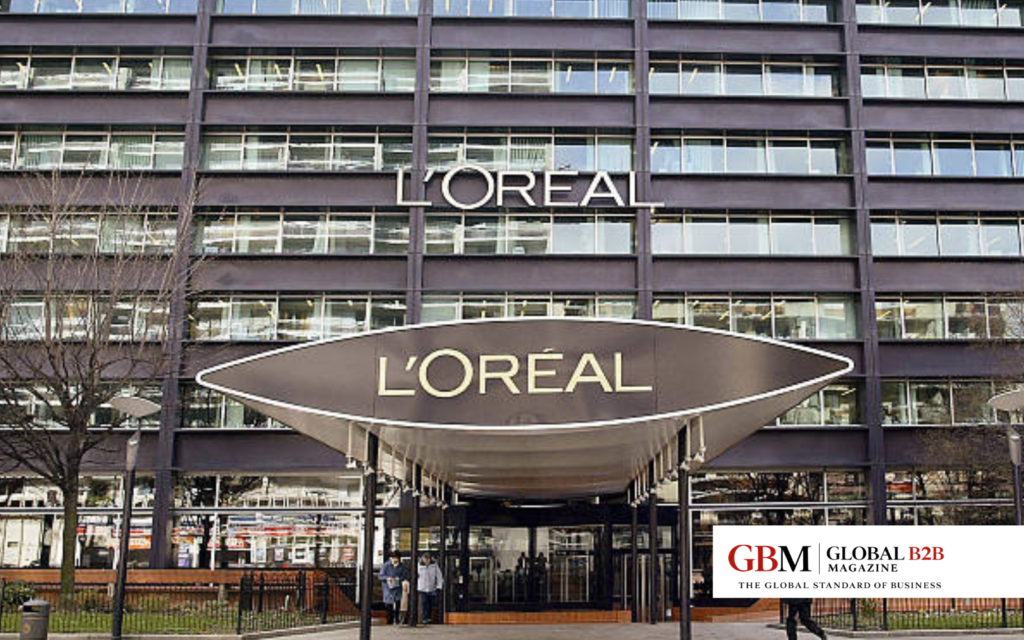
4. L’Oréal Group (France, with Asia-Pacific Headquarters in Shanghai)
| Metric | Detail |
|---|---|
| Estimated Valuation | €241 billion market cap (global) |
| Core Expertise | Anti-aging actives (玻色因 Pro-Xylane),重组胶原蛋白, microbiome science |
| Hero Product | L’Oréal Paris Revitalift Filler (4th Generation Honey Cream / 小蜜罐) |
| Primary Issue Solved | Loss of density, fine lines, uneven texture |
Why They Lead: While French-headquartered, L’Oréal’s dominance in Asia is undeniable the company controls a significant share of the Asian facial care market, which represents 43% of all skin care sales regionally . Their USD 383 million investment through 2030 to establish an AI-powered beauty tech innovation hub in Hyderabad, India, underscores their commitment to Asia-first innovation .
Technology Edge: The fourth-generation Honey Cream (小蜜罐) features supramolecular重组胶原蛋白, 玻色因 PRO, four types of peptides, and Manuka honey extract a multi-targeted approach to anti-aging that has resonated strongly with Chinese consumers seeking proven, clinically-backed efficacy . With China alone representing 39% of the Asian skin care market, L’Oréal’s deep understanding of local consumer preferences gives them an unassailable advantage .
5. Estée Lauder Companies Inc. (US, with Strong Asia Presence)
| Metric | Detail |
|---|---|
| Estimated Valuation | USD 48 billion market cap (global) |
| Core Expertise | Night repair technology, microbiome restoration, clinical anti-aging |
| Hero Product | Advanced Night Repair Synchronized Multi-Recovery Complex |
| Primary Issue Solved | Environmental damage, circadian rhythm disruption, visible aging signs |
Why They Lead: Estée Lauder’s Advanced Night Repair franchise remains one of the most successful skin care products in Asian history, with 92% user satisfaction reported across third-party测评 platforms . The brand’s strength lies in its clinical validation approach partnering with global dermatology research centers to provide consumers with science they can trust in an era of increasing regulatory scrutiny.
Regulatory Advantage: With China’s Cosmetic Supervision and Administration Regulation (CSAR) requiring detailed pre-market safety assessments and ingredient registration, Estée Lauder’s established compliance infrastructure gives them a significant edge over smaller competitors .
6. Kosé Corporation (Japan)
| Metric | Detail |
|---|---|
| Estimated Valuation | JPY 600 billion (approx. USD 4.0 billion) |
| Core Expertise | High-precision emulsification,美白 (brightening), sensitive skin solutions |
| Hero Product | Decorté AQ Meliority Intensive Cream |
| Primary Issue Solved | Uneven skin tone, dullness, sensitivity-induced inflammation |
Why They Lead: Kosé has carved out a distinctive niche in brightening and sensitivity care two concerns that resonate deeply across Asian markets where hyperpigmentation and barrier repair remain top consumer priorities. Their Decorté luxury line competes directly with La Mer and SK-II in the ultra-premium segment, which is growing faster than mass-market skin care across China and Japan.
Innovation Focus: The company leverages AI-powered formulation science to optimize ingredient stability and skin penetration, ensuring that active ingredients reach their intended targets within the skin’s layers .
7. Beiersdorf AG (Germany, with Nivea India and Regional Operations)
| Metric | Detail |
|---|---|
| Estimated Valuation | €30 billion market cap (global) |
| Core Expertise | UV protection, moisturization, dermatological safety |
| Hero Product | Eucerin Hyaluron-Filler + Elasticity |
| Primary Issue Solved | Photoaging, moisture barrier damage, sensitive skin conditions |
Why They Lead: Through Nivea India Pvt Ltd and their Eucerin dermatological line, Beiersdorf has established a dominant presence in mass-market and medical skin care across South and Southeast Asia. Their strength lies in UV protection education a priority supported by WHO’s INTERSUN program, which guides member states including China and India on mitigating UV-related skin damage .
Market Opportunity: With 64.2% of Indians now reporting at least one sun-safe behavior, up significantly from previous years, Beiersdorf is well-positioned to capture growing demand for accessible, effective sun protection across price-sensitive markets .
8. Hindustan Unilever Limited (India)
| Metric | Detail |
|---|---|
| Estimated Valuation | INR 5.5 lakh crore (approx. USD 66 billion parent Unilever) |
| Core Expertise | Ayurvedic formulations, mass-market accessibility, digital-first distribution |
| Hero Product | Lakmé Absolute Perfect Radiance Serum |
| Primary Issue Solved | Uneven tone, dullness, affordability barriers to quality skincare |
Why They Lead: As the Indian skin care market explodes driven by 900 million internet users and government initiatives like Digital India HUL has leveraged its distribution network to make quality skin care accessible across urban and semi-urban markets . Their Ayurvedic-inspired formulations tap into deep cultural preferences for natural ingredients while meeting modern efficacy standards.
Digital Innovation: HUL’s investment in AI-powered recommendation tools and vernacular content has enabled them to connect with first-time skin care buyers in Tier 2 and Tier 3 cities, where aspiration for premium experiences meets practical budget constraints.
9. Haimo (Guangzhou Yangzao Biotechnology Co., Ltd. – China)
| Metric | Detail |
|---|---|
| Estimated Valuation | Not publicly disclosed (rapidly growing private company) |
| Core Expertise | Cell therapy skin technology (细胞疗肤科技),时光肽 (Time Peptide) |
| Hero Product | Haimo Juvenile Essence Cream (幼态精华霜) |
| Primary Issue Solved | Early-onset aging signs, collagen degradation, preventive anti-aging |
Why They Lead: Haimo represents the new wave of Chinese domestic brands challenging international incumbents with science-first innovation. With a 95.6 comprehensive score in anti-aging efficacy evaluations the highest among analyzed brands Haimo’s Time Peptide technology stimulates collagen synthesis while providing antioxidant protection against environmental stress .
Consumer Alignment: The brand targets the rapidly growing 25-35 age demographic, which now accounts for 68% of anti-aging consumers a dramatic shift from traditional anti-aging marketing focused on older demographics . Their philosophy “Anti-aging is a negotiation with time; the more effort you invest, the gentler time becomes” resonates with younger consumers embracing preventive skincare as a long-term investment rather than a reactive solution.
Market Context: With China’s anti-aging skin care market projected to reach RMB 89 billion (approx. USD 12.3 billion) in 2026, growing at a 27% year-on-year rate significantly outpacing the overall beauty market’s 4% growth Haimo exemplifies the domestic brand renaissance driven by cell-level repair technologies and clinically-validated efficacy .
Key Market Trends Shaping Asia’s Skin Care Landscape in 2026
1. AI-Powered Personalization Goes Mainstream
South Korean dermatology clinics now employ AI multi-spectral imaging to evaluate over 16 skin conditions, while India’s Nykaa launched its AI-based Skin Scan tool in 2025, analyzing selfies for up to 15 skin parameters . This shift toward data-driven customization is transforming skincare from standardized products to precision treatments tailored to individual biology.
2. Preventive Anti-Aging Dominates Consumer Behavior
Between 2022 and 2024, the percentage of consumers beginning anti-aging regimens before age 30 jumped from 59.2% to 71.5%, with those under 24 increasing from 15.5% to 23.4% . The concept of “preventive anti-aging” has become mainstream, with younger consumers seeking cell-level protection years before visible aging signs appear.
3. E-Commerce and Digital Health Integration
With Southeast Asia’s internet economy projected to reach USD 360 billion by 2025, and 42% of Asian skin care sales now occurring online, brands are investing heavily in digital dermatology platforms . Clinikally’s “Clara” AI skin analysis tool and Expo 2025 Osaka’s advanced facial imaging technologies demonstrate how skin care is becoming a digital health category .
4. Regulatory Scrutiny Drives Quality Improvement
China’s Cosmetic Supervision and Administration Regulation (CSAR) and ASEAN’s Cosmetic Directive (ACD) require brands to maintain Product Information Files (PIF) and submit clinical data supporting efficacy claims . This regulatory environment is accelerating industry consolidation, favoring established players with robust R&D capabilities while raising barriers for less scrupulous competitors.
The Future of Asia’s Skin Care Market
The Asia top 9 skin care brand brands in 2026 represent a diverse ecosystem of innovation from Japanese fermentation masters to Korean AI diagnosticians, Indian Ayurvedic formulators to Chinese cell-therapy pioneers. As the market expands from USD 91.0 billion in 2026 to USD 114.57 billion by 2032, success will belong to brands that combine scientific rigor with cultural resonance, digital innovation with human touch .
For consumers across Asia, this competitive landscape means unprecedented access to products that don’t just promise results but deliver them backed by clinical data, AI precision, and centuries of botanical wisdom. The future of skin care is here, and it’s more personalized, more effective, and more accessible than ever before.
*Data sources: MarkNtel Advisors Asia Skin Care Market Report 2026, 2026 Global Anti-Aging Skincare Industry White Paper, Euromonitor International, Ministry of Electronics & IT India, WHO INTERSUN Program