
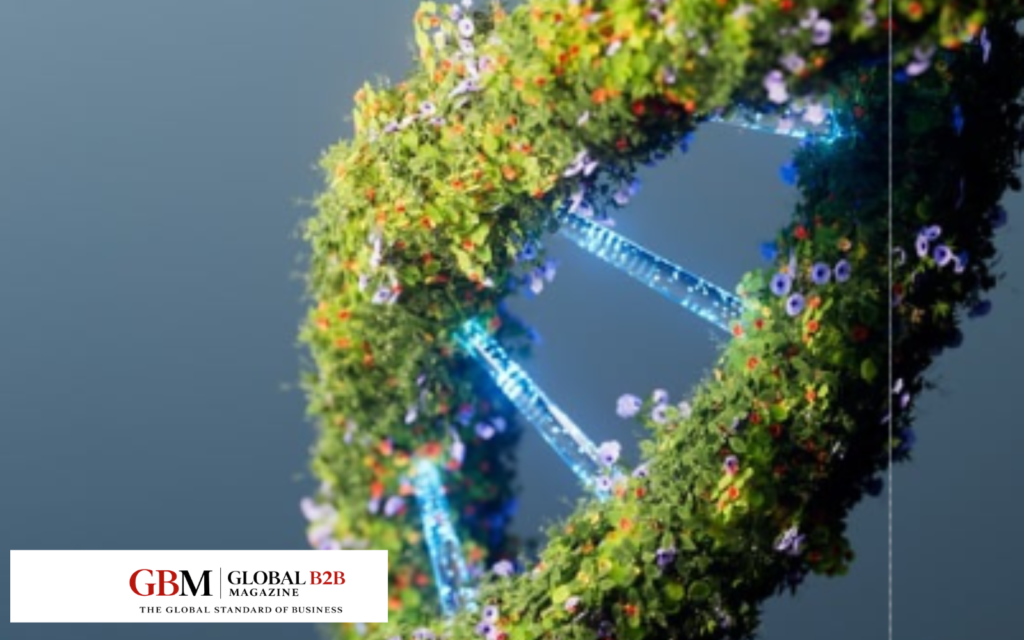
Plants and animals have been evolving for millions of years. Humans have been tinkering with robotics for a couple millennia, with industrial robots around for less than 100 years. Maybe we can learn a thing or two from the natural world when it comes to engineering our world. That’s the aim of biohybrids, robots that make use of living organisms in their operations.
“Mechanisms, including computing, understanding and action as a response, are done in the biological world and in the artificial world that humans have created, and biology, most of the time, is better at it than our artificial systems are,” Robert Shepherd, head of Cornell University’s Organic Robotics Lab, told CNN. “Biohybridization is an attempt to find components in the biological world that we can harness, understand, and control to help our artificial systems work better.”
“Biohybridization is an attempt to find components in the biological world that we can harness, understand, and control to help our artificial systems work better.”
ROBO-FUNGI
Shepherd’s team at Cornell has developed a pair of robots that use the mycelia of king oyster mushrooms to control them via small electrical signals they produce. With the mycelia connected to electrodes, the electrical signals cause the robots to move. As mushrooms tend to grow in dark places and shy away from light, the researchers shine UV light on the biohybrids, causing them to move in the opposite direction.
“The potential for future robots could be to sense soil chemistry in row crops and decide when to add more fertilizer, for example, perhaps mitigating downstream effects of agriculture like harmful algal blooms.”
“Fungi may have advantages over other biohybrid approaches in terms of the conditions required to keep them alive,” Victoria Webster-Wood, an associate professor at Carnegie Mellon University’s Biohybrid and Organic Robotics Group, told CNN. “If they are more robust to environmental conditions this could make them an excellent candidate for biohybrid robots for applications in agriculture and marine monitoring or exploration.”
The fact that the biohybrid robots don’t require a tether to connect the living and electronic components – instead the mycelia grow around the electrodes – makes the achievement particularly noteworthy. Shepherd foresees agricultural applications for his team’s biohybrids. “In this case we used light as the input, but in the future it will be chemical. The potential for future robots could be to sense soil chemistry in row crops and decide when to add more fertilizer, for example, perhaps mitigating downstream effects of agriculture like harmful algal blooms,” he told the Cornell Chronicle.
MEDICAL MINIS
The pinhead-sized biohybrids that Prof. Taher Saif at the University of Illinois use cells from mice muscle and a collagen- based “extracellular matrix” to self-assemble around a polymer skeleton. They use motor neurons from mouse brains or stem cells that make the muscles contract to cause the tiny robots to “walk” or “swim.”
Saif hopes that one day his creations will be advanced enough to act as a sort of artificial immune system, detecting and attacking cancer cells through our bloodstreams. “It may or may not be possible in my lifetime,” he told Wired Consulting. “But it’s the goal.”
The next step in that goal is to try to train the neurons – which are already genetically engineered to respond to light – to make decisions on their own and direct themselves toward a target. Saif plans to use a punishment/ reward system to help the neurons develop a “memory” of what happens when they move in a certain direction.
“The question is whether neurons on a petri dish can do things that animals do,” he said. “Can they remember things that they have experienced before? Can they develop logic?”
If things go right, these miniature biobots could help fight cancer, test drug efficacy, even clean toxins from the natural environment.
Already, researchers at the University of California, San Diego, have shown that biohybrid microrobots can deliver drug-loaded nanoparticles to inhibit the progression of lung metastasis. These biohybrids can reach places traditional chemotherapy doesn’t, using green microalgae and nanoparticles coated with red blood cell membranes to deliver chemotherapy drugs. “Upon intratracheal administration, algae-NP(DOX)-robots efficiently transport their drug payload deep into the lungs while maintaining continuous motility,” the researchers wrote. “This strategy leads to rapid drug distribution, improved tissue accumulation, and prolonged retention compared to passive drug-loaded nanoparticles and free drug controls.”
SCALING THE RIGHT WAY
Using mushrooms is one thing, but when you start using cells from living animals and stem cells, people begin to wonder about the ethics of creating biohybrids. Especially if they’re being trained to make decisions and injected into people’s bodies.
“Every year, they become more complex, and different types of tissues are added into the mix. … As their complexity increases, people wonder whether they feel pain and are sentient, and how they should interact with them,” Dr. Rafael Mestre of the University of Southampton, who studies emerging technologies, wrote.
Scaling up the use of biohybrids could, however, prove to be environmentally friendly. Researchers at ETH Zurich University’s Soft Robotics Lab 3D-print muscle cells and hope to be able to use plant cells in the future to produce artificial muscle and tendon constructs that use electrical pulses to power them. This would ease ethical concerns and make more robotics materials biodegradable.
“We don’t need to add to the trash of the world by producing robots that are made of artificial materials,” assistant robotics professor Dr. Robert Katzschmann told Wired Consulting. “We will inevitably have robots take over certain tasks for us in the future, so why don’t we just build them in the same way that nature does?”
After all, it’s been doing this a long time. “We will inevitably have robots take over certain tasks for us in the future, so why don’t we just build them in the same way that nature does?”