
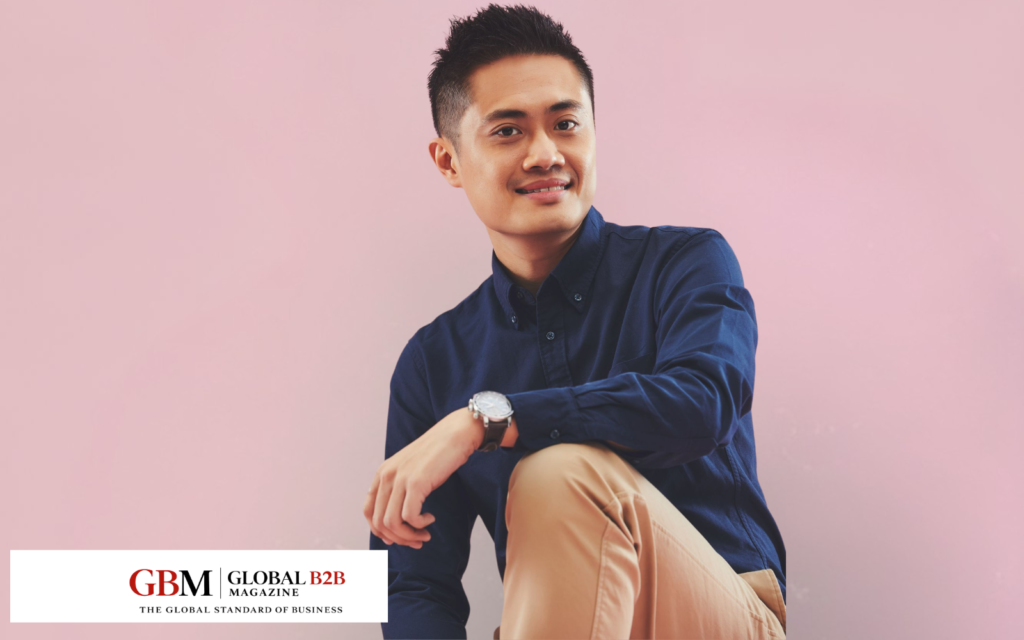
Inside the quiet rise of the StraitsX co-founder building Asia’s digital payment backbone
In the global fintech narrative, where disruption is often loud and heavily marketed, Tianwei Liu represents a more understated force one focused not on headlines, but on infrastructure.
As the CEO and Co-founder of StraitsX, Liu is helping build the foundational rails for a new financial system one where money moves as seamlessly as data. His work sits at the intersection of blockchain technology, regulatory frameworks, and real-world financial use cases, a space few leaders navigate effectively.
From Engineer to Fintech Architect
Liu’s journey into fintech was anything but conventional. With a background in computer and electronic engineering and experience at companies like Amazon Lab126, he began his career as a builder writing code, solving systems problems, and understanding how technology scales.
But it was a personal frustration that sparked his entrepreneurial leap. After returning to Southeast Asia from Silicon Valley, Liu encountered a fragmented payments ecosystem slow bank transfers, lack of interoperability, and limited access to modern financial tools.
Where others saw inconvenience, Liu saw opportunity.
The Birth of a Payments Ecosystem
In 2016, Liu co-founded Xfers, a payments platform designed to simplify bank transfers and enable businesses to move money more efficiently. That venture would later evolve into StraitsX, as the company pivoted toward blockchain-powered financial infrastructure.
The transition was not merely strategic it was visionary. Liu recognized early that the next phase of financial innovation would not come from front-end apps alone, but from rethinking the underlying systems that power transactions.
Today, StraitsX operates as a regulated payments infrastructure provider, issuing stablecoins such as XSGD and XUSD, and enabling seamless cross-border transactions for businesses and institutions.
Building Trust in a Trustless World
One of Liu’s defining philosophies is that technology alone cannot transform finance trust must be engineered alongside it.
In an industry often criticized for regulatory ambiguity, StraitsX has taken a different path. The company operates under the oversight of the Monetary Authority of Singapore, emphasizing compliance, transparency, and strong banking relationships.
For Liu, this is not a constraint it is a competitive advantage.
By aligning innovation with regulation, he has positioned StraitsX as a bridge between traditional financial institutions and the emerging world of digital assets.
Solving the Cross-Border Puzzle
At the heart of Liu’s work lies one of finance’s oldest challenges: cross-border payments.
Traditional systems are often slow, expensive, and fragmented. Stablecoins, in contrast, offer real-time settlement, lower costs, and programmability features Liu believes will redefine how money moves globally.
Under his leadership, StraitsX is enabling businesses to transact across Southeast Asia with unprecedented efficiency, connecting local payment systems into a more unified network.
A Builder’s Mindset in a Hype-Driven Industry
What makes Tianwei Liu particularly compelling is his restraint.
He is not a headline-seeking founder, nor does he position himself as a visionary in the conventional sense. Instead, his leadership reflects an engineer’s mindset: solve real problems, build scalable systems, and let the impact speak for itself.
Even in conversations about the future of finance, Liu avoids grand predictions. His focus remains grounded on execution, partnerships, and creating tangible value for users.
The Road Ahead
As digital finance continues to evolve, the importance of infrastructure will only grow. The companies that define the future may not be the most visible, but the most embedded.
In that context, Tianwei Liu’s work with StraitsX takes on greater significance. By building compliant, scalable, and interoperable payment systems, he is not just participating in the fintech revolution he is helping enable it.
In a world chasing the next big thing, Liu is focused on something far more enduring: making money move better.